The Rise of CCTV

CCTV has had a huge effect on the way in which we treat security systems, protect our valuables and monitor illegal activity. It is certainly something we take for granted considering its recent emergence and high-tech characteristics.

You are likely to find CCTV everywhere in the public domain as well as in domestic and commercial properties. There’s no doubt CCTV has become something we simply accept for what it is, so how exactly has it turned into one of the most important security features of our generation?

The vast majority of businesses nowadays will take full advantage of CCTV to prevent intruders from getting away with stolen property. In addition, consumers have invested millions in having CCTV installed for their premises to encourage tighter security that reduces the risk of theft. Ultimately, it helps prevent anxiety surrounding the potential for robbery and theft and gives both domestic and commercial property owners peace of mind.

Over the years, CCTV cameras have taken many different shapes and have subsequently developed to become more efficient in catching criminals in the act, from bank robberies to speeding. Here’s how this fascinating bit of tech has evolved over the years.

Before Commercial Use

CCTV was actually first introduced to monitor V-2 rockets in 1942 in Germany, with engineer Walter Bruch using the technology for monitoring purposes only. This is the earliest documented use of CCTV. However, it was soon as introduced on a commercial scale and in 1949, the system was promoted by an American government contractor.

This was CCTV in its infancy, so it could do little more than monitor live events and didn’t have the capability to capture or record events. This meant that anyone using these systems would have to be watching a live feed and note down anything suspicious.

The First Video Recordings

It was recognised that the data provided by CCTV could be incredibly valuable to detectives and government officials, so methods of capturing and recording this data were thought up and tested. These were first introduced as highly primitive reel-to-reel recording systems which used magnetic tapes.

These tapes needed to be swapped manually which cost a lot of money and proved to be both difficult and unreliable. These systems were relatively rare due to the cost of manufacturing, so it’s no surprise operatives soon got tired of threading tape from the used reel through the recorder onto a new empty reel.

The Age of VCR’s

It wasn’t until the introduction of VCR’s that surveillance technology was unearthed once again and rapidly developed to create far more reliable, cost-effective and efficient CCTV systems. VCR’s, or video cassette recordings, were widely available in the 70’s and it was this technology that was passed over to those working on new and improved surveillance cameras.

Thanks to this new technology, CCTV was given a new lease of life and could now be used in many different ways. Screens no longer needed to be monitored by staff, with systems running by themselves and recording collected data. Business found this new form of CCTV to be extremely handy, especially when it came to catching thieves who, unexpected to them, had been caught stealing private property overnight.

Like most groundbreaking technologies, these CCTV cameras were far from perfect and still had their flaws. Only so much data could be stored on one tape, meaning that any criminal investigation required shelves upon shelves of tape recordings to be stored like a library, taking up plenty of office space.

The Introduction of DVR’s and NVR’s

VCR’s could only take CCTV so far and soon enough, in the 1990’s; DVR’s (digital video recorders) were introduced. It was these systems that enhanced the user-friendly experience of CCTV cameras, with installation and the collection of data becoming far easier. Digital recorders meant that video tapes were no longer required, so the age of countless amounts of tape stored on shelves was eradicated to the relief of many.

This takes us right up to date and to the introduction of NCR’s, or network video recorders. These systems process and encode footage before streaming it to NVR’s for storage purposes or remote viewing. If a firm has multiple site locations or various departments, NCR’s are incredibly useful and allow for CCTV throughout an entire network.

CCTV has reached greater heights since its introduction in 1942 and, with the technology in such high demand, it’s likely that it will continue to develop and give us even more assurance about our levels of security on both a domestic and commercial level.

Article provided by Stephen Parkes of www.rentrifone.com, a London based Security Company specialising in door entry systems, CCTV, access control systems and digital satellite TV systems.

A History of Window Trends

window-trend

‘Windows’ in the less conventional sense, have been around since humanity was erecting mud structures in which they would eat and sleep. The Romans are the first known instances of using glass in their windows in the west, first produced in Roman Egypt in 100AD. The East Asia’s were more prone to paper windows as this was more economical in China, Korea and ancient Japan.

Throughout the UK, the modern style ‘glass’ window only started becoming common in homes from the early 17th century, whereas previously windows were made up of panes consisting of crushed and flattened animal horns. Originating from the Old Norse word ‘vindauga’ which literally translates to wind eye, modern windows as we know them have been around for hundreds of years, but they have certainly changed in their own right since they were first introduced in the 17th Century.

17th Century Stuart Styles
The start of the 17th century saw the return of a number of artists, bringing over their own impressions and experiences of the Italian Renaissance. Because of this windows becan to conform to new ‘classical ideals’ as they started to be built taller as opposed to wider, with width to height ratios like 1:1 or 1:2. Throughout the 17th Century these windows were more and more commonly constructed using timber in a ‘cross casement’ style window. Smaller windows were still short and wide, although timber was also used on these small windows.

At the start of the Seventeenth century we saw a number of stone mullions with an ovolo or egg shaped moulding, however as the century progressed it became more common to see shorter and narrower mullions that followed the shape of each window, as inspired by the Italian Renaissance style of windows.

Towards the end of the 17th century, around 1675 we saw the invention of ‘crown glass’ which led to a cross-casement window design that used larger panes of glass, which would become a staple found in many window styles from then on.

Georgian 18th Century Windows
The turn of the century saw the invention of the glorious sash window, consisting of two glazed timber frames made up of smaller panels.  A grid of timber glazing bars was often used to hold the glass and would be up to 35mm thick. As the 18th Century progressed, sash windows were more commonly made from pine and the glass panes became thinner, sometimes as little as 10mm.

In the late 18th century, early plate glass was introduced, making glass panes even larger and reducing the number of glazing bars. The usual Georgian window style was known as a ‘six over six’ and although sash windows became less expensive as their design was perfected, they were still more common among the rich than among the working class.

The Regency era and the Victorians
Throughout the 19th Century window makers and designers tried to break away from the grid arrangements of previous window designs, redesigning the patterns of glazing bards in order to create something new and original. As a result of this, margin lights grew in popularity and were often filled with colourful panes of glass in a stained glass effect.

As plate glass had become far more available, with improved methods making it less expensive to produce and frame, glass plate windows became more common for all classes of folk. The second half of the century saw some experimentation with iron frames for plate glass, however this was not very popular and is often only seen inc conservatories and industrial buildings.

Moving forward to the Present Day
As a result of the war throughout the early 20th century, window designs were equally split between traditional methods and the more modern methods we have grown to know today. Timber framed windows were repaired and renovated by classical enthusiasts while the modernist windows were now made from hot-rolled steel.

A more minimalist style became popular towards the end of the 20th century, producing simple, functioning windows with quality over appearance at its core. In the 1980’s ‘planar’ flazing was introduced, where the glass was attached by bolts or vacuum pads to an internal armature instead of being held in frames. This armature could have been made from steel tubing with a silicon sealant placed between the panes to seal them from weather effects.

Double-glazing and uPVC windows were also developed in the late 20th century, with more efforts made to increase insulation and decrease the carbon footprint of the average household. In today’s modern glass market we see a number of different traditional styles often combined with more modern insulation methods.

As with anything developed by humanity throughout the ages, the styles and makes of windows designed has changed drastically since the Stuarts. Every year our best glassmakers and contractors are working together to create new and beautiful windows for us to enjoy in our homes and commercial buildings for years to come.

While it is important to look forward to the future when it comes to state of the art technologies created to improve insulation and safety as well as maintaining the aesthetic beauty of windows, we should not forget the past and each stepping stone that has brought us to our accomplishments today.

This article was provided by www.thewindowshuttercompany.co.uk, a Sussex based Specialist Company providing beautiful, bespoke window shutters to transform and enhance your living space.

4 Great Home Activities to Maximise Efficiency of Primary School Education

School Building

Education can often be a sore topic for many parents. There is a pretty high chance that we do not remember our own education fondly, so we are often loathe to get back into the swing of things when it comes to schooling our own kids. However it is important to be able to inspire our children to maintain a positive attitude when it comes to attending and participating in school activities. Children who actively enjoy school will find it easier to absorb information, will be more eager to learn and will steam ahead of their classmates.

So how can we instil this enthusiasm in our children? Part of maintaining a positive outlook on the school environment is to dedicate at least a little bit of time to it outside of the classroom. This helps to reinforce the idea of school being a very present part of your children’s lives and not that it is just some place they get carted off to for hours every day.

Make school and education something that is encouraged and welcomed in your home. If your children want to talk to you about what happened in school today, it shows that they are expressing an interest and you should too! It is easy to forget that teachers and parents should be working together to help their children, so any ‘lessons’ you teach outside of the classroom should re-consolidate what they have learned at school.

Weekend Field Trips!
Kids love a day out, so why not incorporate learning into your days out? By going to a museum or a local art gallery, kids get into a different environment all while learning about history, art, geography, science and more. What’s more, many museums are free or have a discount for young children, so it makes a fantastic frugal day out!

Creating a Positive Homework Environment
It can be challenging getting your kids to do their homework, but this can often be caused by home distractions. Like when you come home after a long day at work, children often come home thinking they are ‘done for work’ for the day. Homework therefore can be hard for kids to get done, but this can be easily solved by creating a ‘homework environment’.

It doesn’t have to be a permanent feature, just a small desk with colourful posters relevant to teaching subjects including perhaps a few inspirational posters. The purpose of the ‘homework zone’ is to be clear, clean and free from distractions. Mobile phones and computers are not permitted, except for research purposes.

Reinforcement – Celebration of School Achievements
Anything such as a ‘Well Done’ or a sticker or a big green tick can represent a massive milestone for a child. They see that they have exceeded expectations and they feel proud. But it can all come to nought if they go home and show their parent, only to receive a smile and a nod. While getting all their spellings right or sitting still for ten minutes may not be achievements to us, the teacher has seen fit to boost your child’s confidence today. You need to back them up!

I’m not saying throw a big party with cake and sprinkles, but expressing interest and congratulating the child will really help to build their self esteem and inspire them to do even better next time. Positive conditioning is known to work, so in order to consolidate the teacher’s hard work in the classroom, it is important that you congratulate your children on any achievements they receive in school.

Follow up Chats
“What did you do at school today” “Nothing” is something we often see and hear on Television shows, however it is often said by teenage boys and girls who have already lost their love for the school system. By asking your child what they did at school, you are giving them a chance to remember what happened, and communicate what happened, reinforcing those mental capabilities.

However it is important that you are interested in what they have to say. Children are very acute, even when they don’t appear to be, so if you’re not really paying attention, or you’re only half listening, they’ll pick up on it. How do you expect your children to listen to others if you can’t listen to them?

Long story short, whether your children as excited, enthusiastic, nervous or even worried about school, it doesn’t matter so long as you express a positive attitude towards school. If you start treating attending school and education as a chore, or as something that ‘must be done’, then your children may no longer find joy in it. They will see it as their version of a ‘job’, something that gets in the way of having fun.

However if you remain upbeat and positive, asking your children and helping them to use what they have learned in school at home, this can really help children to see the benefits of their education and the change will really start to show. Particularly with young children and primary children, it is very much ‘monkey see, monkey do’ so if you express an interest in their school lessons, they will too!

Article provided by www.bloohouse.co.uk, an innovative independent school for 5-11 year olds specialising in maximising children’s education using modern methods and a unique 8 aptitude learning scheme.

I’d love to Work There! 4 Stunning and Stylish Office Designs

World Best Office Design

When we think of offices we think of the typical boardroom, black and white and grey desks, whiteboards or interactive boards, pie charts, graphs, pictures of long landscapes etc. We think of an environment that is essentially, stifling, boring to work in. This is not our fault, it is how many forms of media has portrayed offices for over 50 years, in books and comics and even in films and on television shows. We have been brought up to believe that an office job is stifling of creativity; it is a boring and unwanted place to be.

However many of us will spend a great deal of time within an office, whether it is for meetings or as a part of a desk job, or even doing paperwork at our home office. So why must it be portrayed as something unwanted, hellish? Surely it would make more sense to create an office environment that overwhelms the senses, engages the creative mind or even encourages free thought? Because that is not the ‘official’, ‘professional’ sense of what an office should be.

Some of the largest marketing and business companies worldwide are well known for their unique brands, their stance on revolutionising the world as we see it and their office spaces are no different. We’ll have a look at four national and global companies that take a very different approach to the layout and design of their offices, and why these designs have helped their brands become so successful.

Invention Land
Self-marketed as ‘The World’s Largest Invention Factory’ Invention Land is a place where ideas are born and solidified. The company boasts having sold products in over 1200 online and retail stores, with numerous industry awards claimed by Invention Land alone. Located in Pittsburgh, Pennsylvania, Invention Land, Invention Land’s offices contain a number of ‘themed’ exhibits where ideas are able to bounce around and grow in a colourful and creative environment.

Step aboard the Pirate Ship Discovery, for example, a tech office designed on the deck of a Pirate Ship. With dangerous waters swimming below and a full cast and crew of model pirates, this section of the office is to encourage game design. In contrast the Nursery Nook, designed after the Woman who Lived in a Shoe, is where children’s toys, books and nursery products are designed. The Nursery Nook also doubles as a place of rest; an ideal location for some of the world’s busiest mind, when things get a little bit too much. a

Google
Everybody who knows at least how to search for something on the Internet and their Aunt Mildred knows about Google. As one of the leading companies for innovation and as one of the companies leading the online industry, the Google offices are certainly something else. Boasting a wide range of different seating arrangements, from angled plastic chairs to beanbags to ‘rest pods’, the Google offices are a place for work, ideas and even rest.

One particular unique element about the Google offices are their cafeterias. Known only as ‘cafes’ the eateries present in Google offices encompass a wide range of cultures and styles. Whether you are looking for a quick sushi lunch, a refreshing coffee, or you just want to sit down with a simple sandwich on a secret garden-esque rooftop, it seems Google has every option. Plus, employees eat for free!

Facebook
Another company well known for its variety of seating and meeting rooms, the Facebook offices are a mish-mash of wooden decks and soft cushioned areas, with lush bean bags in conference rooms and sun sparkled patios perfect for quick luncheons before rushing off to the next meeting.

One quirky feature in the Facebook offices are that many of its conference rooms are drawn from pop culture, such as Awesome Town, or a blend of characters and cocktails such as Darth Jager and Jar Jar Drinks. The company also offers a number of recreational rooms, designed to help employees wind down or calm down after a particularly stressful session in attempting to build the future for everyone. Whether you fancy a round of Guitar Hero, or a refreshing game of chess in a quiet room is more your ideal, Facebook has it all.

Zynga

Known for really changing the social gaming industry, Zynga has taken some great steps towards bringing video games into a more mainstream media. While some ‘hardcore gamers’ find this to be a step away from the ‘Golden Era’ of video games, many others welcome this new casual foray into games, as it brings people closer together for a mutual love.


The offices at Zynga are no different, with a number of social and friendly competitive games dotted around the office, such as an arcade, the Zynga offices even have their own ‘take your pet to work’ week, which does wonders for relaxation and productivity, encouraging creativity in all forms.

While these revolutionary offices are well known for their business success, it may be a few more years before these designs are more widely circulated. However it is certainly a step in the right direction and works well for bringing the ‘office environment’ back into the list of ‘places in which we’d love to build a career’.


Article supplied by www.completeinteriordesign.co.uk, a commercial interior fit out and office refurbishment business comprised of highly experienced designers – serving Surrey, Sussex and London since 2012.

Historical Methods For Keeping Cool

wind catchers

Nowadays there would be mass panic if we had to go a week without air conditioning in the sun shined offices during the sweltering summer. However it does often beg the question – how did they cope before? Modern day air conditioning is a fantastic invention and can be turned as high or as low as you like it, giving employees just the right amount of cool air they need to keep working at optimum levels, but we didn’t always have such sophisticated methods of controlling the temperature in which we live and work.

However in the past there were a number of ingenious manual ways to control temperature and a lot of this was to do with the structure of the buildings people would reside in. The way these structures were built allowed a specific type of air flow that would cool down the space in the summer but also retain heat in the winter. It is all very clever really.

So how did we keep cool in historical times?

Tanzanian Mud Huts – Magical Mud
Primitive huts constructed from mud in Tanzania had a strange quality, it somehow managed to retain heat during the winter, and expelled it throughout the summer. The process of packing the earth tightly together allows it to become a fantastic ‘natural insulator’ which really works wonders all year round.

As an alternative to the man made brick, it is certainly better for yearly climate control and has been recently used as a building materials by conservationists for a number of ‘eco-homes’.

Ancient Italy – Caves and Grottos
For thousands of years we lived and were sheltered by natural rock formations and man-altered caves and grottos. These caves were so designed that they provided essential relief and shade from the hot summers of Italy, while also circulating cool air around the caves.

Regardless of how hot the outside air was, the dynamics of the caves made sure that circulating air was always fresh and cool, making these caves the perfect dwellings during the summer; a sort of summer home for the Ancient Italians, if you will.

The Romans – Water and Slaves
The Ancient Romans were frivolous with a lot of things, including the usage of water which they liked to use to cool themselves down during the summer. Using towered arches to transport fresh water from mountainous areas to their urban areas, the water would be piped through the walls in order to cool the brickwork of houses, thus in turn cooling the interior of each house.

Romans would also use slaves in the hot weather that would fan them with ostrich feathers, and would take baths to keep themselves cool.

Ancient Egyptians – Wind Catchers
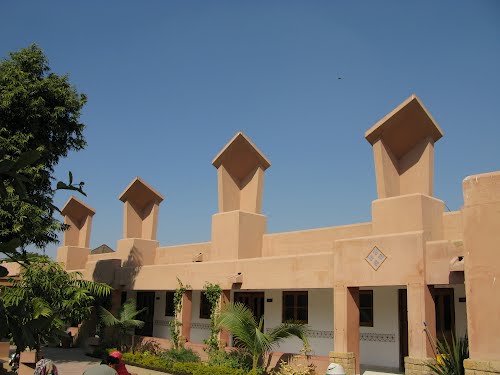
Appearing on both modern and ancient structures, the Egyptians are well known for their ‘wind catchers’, which are special devices mounted on buildings designed to ‘catch’ the air of prevailing winds. These wind catchers would use internal vanes to catch the air and then funnel this fresh air down to the lower levels, in turn driving out the warmer air.

It is an incredibly handy technique which is still very much in place today, and as Egypt can get quite sweltering it certainly saves on some air conditioning bills!

Whether you’re trying to build yourself your very own sustainable eco-home out of tightly packed mud, or you’re more than happy relying on a state of the art air conditioning system, it is important that we do not forget these ancient methods of keeping ourselves cool, as like many other things they have helped us to pave the way to the technology of today and will continue to help us as we move towards a more considerate, brighter future.

Article provided by Stan Firth of www.climachill.co.uk, a specialist in air conditioning – supplying and fitting high quality systems for both commercial and industrial properties.

How 3D Printing has Affected the Design and Implementation of Specialty Industry Equipment

Although not currently readily available for your average Joe to go out into the street and buy one, 3D printers are fast becoming the popular technology of today. If you have a little bit of technical know-how, and don’t mind a fairly hefty printer taking up space, you can even purchase a 3D printer for yourself, or at least purchase all the parts to build one.

3D printing is a wonderful new technology that is still in its final design stages at the moment, but if you’ve been following the technical news you may have seen some of the fantastic things already printed with 3D printers today. There are a number of problems the modern world faces that may be solved – albeit not overnight- by the implementation of 3D printers into the workplace, into the factory setting, even into hospitals at some point in the future.

So what does this mean for engineers who specialise in creating bespoke equipment for industrial companies or computer programs? Some experts have expressed concerns that this new 3D technology may make the applications engineering business market obsolete; however this is not necessarily the case.

How do 3D Printers Work?
Like with any sort of 3D design or modelling, a design must first be built in a 3D modelling program. The design has to be flawless, with all surfaces accounted for; otherwise there will discrepancies in your printing. Unlike our brains, computers cannot make assumptions and so will only work on what they have been given, so make sure all the gaps are filled in!

There are three main ways a 3D Printer will ‘print’ each object; Direct 3D Printing, Binder 3D Printing and Photopolymerization. Direct 3D Printing uses inkjet technology to move a nozzle back and forth, dispensing a fluid onto the printer tray. Unlike inkjet printers however, this printer uses waxes and plastic polymers as opposed to ink, and also move up and down as well as left and right, creating a structure which solidifies to create a cross-section which will eventually become a 3D object.

Binder 3D Printing works in a similar way, although instead it uses two separate materials in the printing layers which come together to form a single layer. These materials are a fine dry powder plus a binding element, normally liquid glue. The final method is Photopolymerization, whereby drops of liquid plastic are then exposed to an ultraviolet laser beam. This then converts the liquid plastic into a solid, forming the print.

What Can You Make with a 3D Printer?
Like with many of these inventions, often the only limit to what you can print is your imagination. Everything from spare parts to figurines to working instruments and even coffee cups and clothing! It is all dependent on whether or not the materials needed for these creations can be condensed into a liquid or powder form; such as the 3D printed clothing, which uses the Photopolymerization method to solidify thermoplastics into a wearable form.

Scientific breakthroughs have seen people being able to 3D print scans of an unborn child, 3D printing skin grafts and even managing to successfully 3D print a working synthetic ear. There are whispers in the works that 3D organ printing is in development; however it is not yet entirely clear whether or not this is a hoax. Regardless, 3D printing skin grafts is still a fantastic feat.

Using 3D Printers to build Speciality Industry Equipment
Although currently there are a limited number of uses for 3D printing, new and exciting discoveries are always being made, so there may be a time in the near future where we can even ‘3D print’ metal objects for use in engineering. As it stands the 3D printers can only currently handle plastics and similar materials, but this is still incredibly useful for small programs, stabilisation trays and even spare parts for 3D printers!

It is not clear how close we are to seeing a 3D printer with the ability to create industry specific parts and equipment, but due to the way 3D printing is progressing so far, it is safe to say that it is certainly not outside of the realms of possibility at this moment in time.

What this Means for Engineers who specialise in Bespoke Equipment
If harnessed correctly, this could be a turning point for engineering for the better. 3D printing is at the moment still unfinished, however more and more uses for 3D printing technology are being discovered to this day, so it is not to be dismissed as a passing fad.

By creating the initial bespoke ‘design’ for the equipment, there is still a need for engineers and designers to complete this design process. Once this design has been created for the bespoke piece, the 3D printer can then mass produce that single part, allowing for far less discrepancies, once a design is finalised and approved.

This doesn’t necessarily mean that there will be less of a demand for human engineering when it comes to bespoke equipment, only that bespoke equipment may be easier to mass produce, with the help of a fully operated, working 3D printer. Of course due to the materials used in the printer, this only works for small equipment pieces and will not be implemented for heavy machinery at the current time.

When it comes down to it, machines can only go so far when innovating human engineering. While programmed machines can perform a task to a speed and precision far better than a human worker, it will still require a manual input of the initial design, or any edits needed to be inputted manually. It is for this reason that we will continue to see professional application engineers working alongside programmed machinery, to create a faster, brighter future for the rest of us.

Article supplied by Mike James, a content writer for www.appeng.co.uk, a UK based application-engineering specialist operating from the East Sussex studio since 1983.

6 Common Symptoms of Infertility: What Do They Mean?

6 Common Symptoms of Infertility What Do They Mean

Infertility is a more common problem that many couples experience than most people would originally think. It is not uncommon for couples to try for months or even years to conceive before they reach success or give up completely.

Infertility can be an extremely discouraging issue for anyone to deal with, and not having all the facts can make that even worse. It is essential for anyone who is struggling to conceive to get all the information to help their cause. Here are six common symptoms of infertility.

Bacterial infection symptoms

Bacterial infections may seem like just a nuisance to a woman, but they can be a sign of more serious problems. These infections can signify an STD that can cause hydrosalpinx symptoms. These symptoms can be a sign of infertility and should be addressed immediately to protect a woman’s health and help her conceive. Simple treatment can usually clear up the symptoms well enough to help a couple get pregnant naturally.

Abnormal periods

Abnormal periods are another symptom that many women will not think much about. Most women will just pay attention to when they get their period and not think thoroughly about what their period actually signifies for the way their body is working. Any changes should be discussed with a healthcare professional to help them better understand what issues might be happening.

Unusually long or short menstrual cycles

The cycle of a woman’s menstruation is an important item to follow when trying to conceive. Women who want to get pregnant should know not only when they menstruate every month, but how long each of their cycles actually is to tell when ovulation takes place. Changes in cycle length could indicate a problem that needs to be addressed.

Mood swings

Many people will attribute their moodiness to some outside causes, but there are times when a person can be moody because of what is happening on the inside. Chemical imbalances in the body can cause mood swings and also prevent fertilization from happening easily. Work to resolve these issues to create a more welcoming environment for implantation.

Drastic changes in weight

Losing or gaining weight too quickly is never healthy, but people who do this and area also trying to get pregnant will notice a lot more issues. Drastic and fast weight changes can again disrupt the body’s hormone levels, making conception very difficult. Women and men should both find a way to maintain a healthy and stable weight to improve their chances overall.

Aging

This is the most common reason why people struggle to conceive. Many women after the age of 35 will notice that conception is a lot more difficult. These women may have to try extensive measures in order to continue in the path towards pregnancy. Looking into other fertility treatments and methods that can help the process may seem extreme, but they are very commonly used among women today to get pregnant with less complications.

Image: http://pixabay.com/en/couple-love-holding-hands-people-690489/

Who Can Benefit from Furnished Apartment Rental Options

military-apartments

Are you a corporate employee who has to relocate to a different city or town and are looking for temporary accommodation for you and your family? You could be looking to find suitable accommodation for a business associate who is to work with your company on a consultation basis. You could also be a military woman or a military man who has received a new assignment or deployment orders that require you to move quickly to a new place. For each of these scenarios, furnished apartment rentals can work really well.

Here’s why furnished apartment rentals work as both military housing and as corporate apartments rentals:

  • Flexible leases – Military personnel never quite know when they may be asked to deploy or to report to an armed conflict zone. Corporate professionals also may need accommodation for a couple of months which could be further extended. Obviously traditional leases don’t work here; you need more flexible lease terms.
  • A better option than hotels – Hotels may look after all the basic needs of a person away from home, but the same four walls of a room can become monotonous, tedious and cramped after the first few days. A hotel can also turn out to be expensive. How much better it would be to have a well furnished, private and cozy apartment – a place where you can relax, spread out and even treat yourself to some of your favorite home-cooked meals!
  • Roll in ready options – Corporate as well as military personnel often have to move at short notice. There may be no time to pack up an entire home and to relocate all your stuff in that duration. With furnished apartment rentals however, you have the option of walking into a fully furnished, well appointed home with all the mod cons, and some resort like facilities laid on. There is no hassle of packing furniture at one end and unpacking and setting it up at the other!
  • Great community atmosphere – For professionals with families it is important to live in a place that has a sense of community. Other families living close by and other kids to play with, secure gated accommodation, community activities, facilities such as a gym and pool; and children’s play areas make a lot of sense for young children who may be feeling homesick and unhappy about leaving behind friends, a familiar school and neighborhood and so on.


Corporate Apartments – Buying Versus Renting

It can be a tricky question – should you buy or rent your home? Should you purchase the property that you plan to live in; this can be a significant commitment? Or should you opt for a lease; which is a more flexible option? What does conventional wisdom tell us? Do corporate apartments make sense for you and your requirements? Let’s compare and contrast the benefits of buying versus opting for furnished apartment rentals.

The pluses of buying

Being a home owner is something everyone aspires to – it offers a sense of belonging and of putting down roots. There is also the fact that owning property is always a good investment; one whose worth typically increases over time. You can furnish the place as you want and have it reflect your own personality. You can make alternations and additions of your choice without having to abide by the terms and conditions of a lease. This can be a home that you invest not only your money but also your time and emotions in.

The benefits of leasing/renting

However all too often you need a house that is temporary: you need to relocate to a new place for professional reasons and you know that you will need to relocate again within some years or even some months. Clearly here, buying doesn’t make sense. Leasing fully furnished corporate apartments with flexible leases and utilities included makes more sense. Utilities and upkeep of any dwelling cost quite a lot and need the home owner to keep track of many bills, taxes and other dues.

Maintenance and home security is taken care of, and you don’t need to bear the costs of routine repairs and replacements. You don’t have to undergo the hassle or shipping all your furniture and setting up home afresh. When you opt for corporate apartment rentals, you simply walk into a fully furnished apartment that is both attractive and equipped with all the mod cons you need.

The conventional wisdom of buying property being a sound investment has also been revisited in recent times. With the downturn in the property market, immovable property doesn’t appreciate as much as it used to. Mortgage rates are high and transaction costs can be prohibitive – some real estate brokers could charge as much as 6% to 7% commission on property sales.

So before you decide whether you need to buy a home or whether corporate apartments make more sense, you need to ask yourself some questions based on economics as well as your emotions!


Corporate Apartment Rentals – For Individuals and Families Too

If you’re a professional who has to relocate to a place away from home for a significant length of time; say several months or more, you would likely be hard pressed to make a decision about whether or not to take your family along. Should you take your family along or should you undergo the loneliness of being without your loved ones for an extended period of time? Well thanks to the creative housing solutions offered specifically for exactly such requirements, corporate apartments increase the number of choices you have.

Corporate apartment rentals – tailored for the business traveler

When you have a professional requirement to relocate to a different city for an extended period, you have unique requirements that can be met neither by hotels nor by traditional apartments or homes. After a few days, hotels become boring, tedious and cramped; you have very little privacy or space to spread out. Besides, when you stay at a hotel for an extended period, you can quickly run up expenses that extend beyond your budget. After a while you want some home cooked meals and want no more of the inconvenience of the kids sleeping on the ground on extra mattresses!

But traditional housing solutions are not a viable option either. There is typically a long term lease, the difficulty of furnishing the home with furniture, appliances and other amenities to make it livable. Corporate apartments rentals offer professionals the perfect solution – fully furnished apartments with all the house wares and amenities laid on; plus utilities included in your monthly payment.

Corporate apartments – for families

While corporate apartments can be a great option for individuals, they are as good a choice for families. The first and foremost reason is that these are ready to move in apartments. Fully stocked, attractive and comfortable apartments mean that you don’t have to wait for your delivery truck to bring you your belongings, nor do you have to do the backbreaking job of unpacking and redecorating. Depending upon your family size and requirements, you can opt for an apartment of a suitable size and with the kind of floor plan you prefer.

The facilities laid on by these corporate apartment facilities are another reason why they are a preferred choice for families. Resort style amenities such as a pool, recreational center, fun community activities keep kids engaged and happy. So there are all the amenities that a good hotel would offer, but with the additional benefit of privacy and a great deal of extra living space.

Corporate apartments – the sensible choice

These apartments are not only tailored for corporate travelers and their families, they are also great value for money. You save on the amount you would pay to a hotel for an extended stay. You save by not having to eat out all the time. You save by not having to pack all your stuff and have it moved for a temporary relocation. Utilities are included in the monthly payment so you don’t have to fork out a lot of extra cash each month.