
Nowadays there would be mass panic if we had to go a week without air conditioning in the sun shined offices during the sweltering summer. However it does often beg the question – how did they cope before? Modern day air conditioning is a fantastic invention and can be turned as high or as low as you like it, giving employees just the right amount of cool air they need to keep working at optimum levels, but we didn’t always have such sophisticated methods of controlling the temperature in which we live and work.
However in the past there were a number of ingenious manual ways to control temperature and a lot of this was to do with the structure of the buildings people would reside in. The way these structures were built allowed a specific type of air flow that would cool down the space in the summer but also retain heat in the winter. It is all very clever really.
So how did we keep cool in historical times?
Tanzanian Mud Huts – Magical Mud
Primitive huts constructed from mud in Tanzania had a strange quality, it somehow managed to retain heat during the winter, and expelled it throughout the summer. The process of packing the earth tightly together allows it to become a fantastic ‘natural insulator’ which really works wonders all year round.
As an alternative to the man made brick, it is certainly better for yearly climate control and has been recently used as a building materials by conservationists for a number of ‘eco-homes’.
Ancient Italy – Caves and Grottos
For thousands of years we lived and were sheltered by natural rock formations and man-altered caves and grottos. These caves were so designed that they provided essential relief and shade from the hot summers of Italy, while also circulating cool air around the caves.
Regardless of how hot the outside air was, the dynamics of the caves made sure that circulating air was always fresh and cool, making these caves the perfect dwellings during the summer; a sort of summer home for the Ancient Italians, if you will.
The Romans – Water and Slaves
The Ancient Romans were frivolous with a lot of things, including the usage of water which they liked to use to cool themselves down during the summer. Using towered arches to transport fresh water from mountainous areas to their urban areas, the water would be piped through the walls in order to cool the brickwork of houses, thus in turn cooling the interior of each house.
Romans would also use slaves in the hot weather that would fan them with ostrich feathers, and would take baths to keep themselves cool.
Ancient Egyptians – Wind Catchers
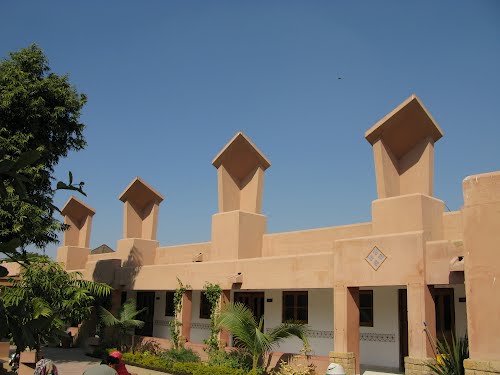
Appearing on both modern and ancient structures, the Egyptians are well known for their ‘wind catchers’, which are special devices mounted on buildings designed to ‘catch’ the air of prevailing winds. These wind catchers would use internal vanes to catch the air and then funnel this fresh air down to the lower levels, in turn driving out the warmer air.
It is an incredibly handy technique which is still very much in place today, and as Egypt can get quite sweltering it certainly saves on some air conditioning bills!
Whether you’re trying to build yourself your very own sustainable eco-home out of tightly packed mud, or you’re more than happy relying on a state of the art air conditioning system, it is important that we do not forget these ancient methods of keeping ourselves cool, as like many other things they have helped us to pave the way to the technology of today and will continue to help us as we move towards a more considerate, brighter future.
Article provided by Stan Firth of www.climachill.co.uk, a specialist in air conditioning – supplying and fitting high quality systems for both commercial and industrial properties.