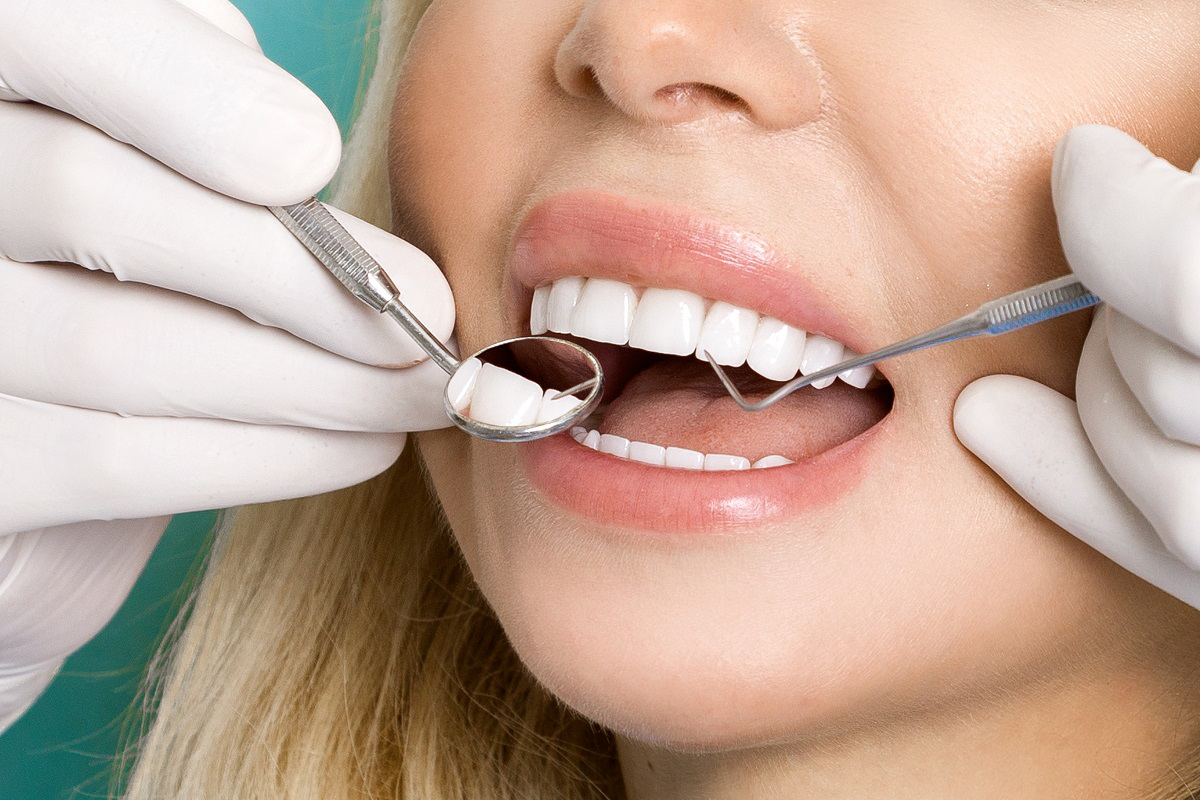
Looking for a Dentist in W1

Are you based in W1 and searching for a dentist? Perhaps you cannot remember the last time you visited a dentist which means you are almost certainly overdue a check up. Whatever the case may be, if you are in need of dental treatment or would just like a routine check up, you may want to visit a dentist in W1.

What to expect when visiting a dentist in W1 for a routine dental check up?

If you are visiting a dental practice for the first time or it has been many years since you visited a dentist in general, at the routine dental check up, the dentist in W1 will firstly obtain your full medical history along with your dental history.

At your routine dental check up, the dentist in W1 will examine your teeth, gums and mouth thoroughly to get an idea of your oral health. X-rays may also be taken at this point and you will have the opportunity to discuss your general health and your diet. Having a discussion about dietary issues is important as it allows the dentist to determine whether your diet includes any habits which could affect your teeth and gums; such as whether you consume alcohol regularly or have a fondness for hard boiled sweets. It will also be important to inform your dentist if you are a smoker as this can increase the development of tartar on teeth when compared to non smokers. The build up of tartar can be detrimental if not removed as quickly as possible as it can lead to gum disease.

If you have no known dental issues, your dentist will provide advice on how to maintain good oral hygiene including discussing brushing techniques and additional ways to improve teeth cleaning habits such as flossing after every meal and using interdental brushes. Interdental brushes have a small bristled head which makes them great at cleaning between your teeth and removing pieces of food and plaque. Interdental brushes come in different widths in order to accommodate the different sizes of gaps. Interdental brushes can be used once a day in order to maintain good oral health and it is advised that you brush gently in between your teeth.

On your first few uses of an interdental brushes, you may encounter some tenderness or bleeding of your gums as you start to get rid of plaque build up. If you do encounter this after a few days, it is important to let your dentist in W1 know so that they can check that you are using the interdental brushes correctly and, if you are not, your dentist can demonstrate how to use the brushes without causing your gums to bleed. After a few days of using the brushes, your gums will become less tender and healthier as you are using the brushes daily.

If after your routine dental check up the dentist has noticed some dental issues upon examining your teeth and gums, options of further treatment will also be discussed depending on what you require.


The Pros and Cons of having Invisalign

Have you heard of Invisalign? Well if you have, you will know that Invisalign in Clapham is a popular form of orthodontic treatment which uses clear aligners to correct teeth that are either crooked or crowded, as well as being able to close gaps and correct a patient’s bite. With all orthodontic treatments, there are many benefits and disadvantages in having this dental treatment so if you are considering Invisalign, it is important to know as much information as possible about Invisalign before going ahead with the treatment.


The benefits of having Invisalign

If you decide to have Invisalign one of the most obvious benefits is that they are clear aligners, which makes them a discreet option when straightening your teeth and popular with adult patients who are looking for an alternative to traditional metal braces and do not want others to know they are undergoing orthodontic treatment.

Another benefit of Invisalign is that they are removable braces, unlike other teeth straightening options such as traditional metal braces which are fixed. This means that an individual can remove their aligners to eat and drink foods normally without worrying about food being stuck in the braces which can happen with fixed braces. You are also able to maintain a good oral care regime as you are able to brush and floss your teeth in between meals.

Compared to conventional braces such as traditional metal braces, Invisalign aligners are considered to be more comfortable as the aligners shift your teeth gradually into the desired position. They are also considered to be less painful and treatment time can be slightly quicker when compared with conventional braces. The plastic the aligners are made out of means the aligners are not only smooth but flexible, which means there is less chance of the aligners irritating your lips or cheeks.

Invisalign is also an ideal dental treatment for those who have issues with their bite. Invisalign successfully corrects bite issues such as open bites, underbites and crossbites. Failure to correct bites can cause a wide range of issues including having a painful jaw, experiencing pain whilst chewing and the development of a speech impairment.


The disadvantages of Invisalign

If you decide to have Invisalign treatment, you will be required to wear them for at least 22 hours a day to ensure that they work effectively. Although many adult patients see this as a benefit as it stops them from snacking often, it can also be considered a hassle to remove the aligners every time you want to eat, especially during work. This also means that you have to remain disciplined throughout the treatment and ensure that you wear them for the recommended amount of hours. For those who find it difficult to wear their aligners as instructed they may experience some pain and discomfort and by not wearing the aligners for the recommended time will mean that your treatment may take longer. Invisalign is also considered to be more costly when compared to conventional braces however with all these benefits the cost is a minor issue.

A comprehensive guide to teeth implants

Are you toying with the idea of dental implants, because you’ve either lost teeth or grown tired of your dentures?

The ground-breaking restoration treatment has improved the quality of life for countless people, but the journey to attaining implants is slow and not without complications.

Find out what the process entails, as well as the benefits and downside to implants at the dentist in St John’s Wood.


The steps involved

Because dental implants involve one or more surgical procedures, several health checks are performed to see whether you’re a viable candidate. During a consultation with your dental practitioner, you’ll be ruled out or face inevitable delays if;

  • You have health conditions, like uncontrolled diabetes, which could delay bone healing
  • There’s insufficient bone in your jaw bone to insert an implant
  • There are existing gum conditions, like Gingivitis or periodontal disease


When does bone grafting/regeneration become necessary?

By not replacing your lost teeth immediately or wearing dentures for a long time, the bone tissue underneath the absent pearly whites becomes porous and brittle from a lack of use, until it eventually breaks down.

For implants not to fail, you must possess enough bone at the treated area. Otherwise, bone grafts are required to rebuild the lost bone before dental implants can be considered.

The implant surgical procedure explained

The first surgical procedure you’ll undergo involves a small incision and drilling. A highly skilled implant dentist will cut into your gum to expose the bone. Holes are then drilled into the bone to place the implant. Once firmly lodged into position, the area is sutured and left to heal.


How does the implant stay in place?

Healing takes place over several weeks. In that time, osseointegration occurs, which is a natural process where the titanium of the implant bonds and fuses with the surrounding bone tissue. Once this phenomenon is complete, the implant serves as the root of your new tooth. It won’t slip out of place and fully restores your biting force. The only way to remove your new tooth piece is at the hands of a professional.


Do implantations ever fail?

Most implantations are successful. That said, while a rare occurrence, implant failure can occur if the bone refuses to integrate with the titanium.

If this happens, the implant will be removed, and the bone is cleaned. You can try again in three months if you still want to.


How long do implants last?

Implants are long-lasting if you take adequate care of them, which means cleaning them as you would with natural teeth. A prosthesis isn’t vulnerable to dental decay. However, the surrounding gum is at risk of contracting Gingivitis, which could be disastrous for your new implant.

See your dentist regularly for close monitoring of your new tooth. Professional cleans are also advised to remove the plaque that your brush can’t reach.

Reducing or stopping bad habits, which include smoking and drinking coffee. During the implantation procedure, try and put a stop to using tobacco -nicotine can slow the healing process down. Avoid chewing on ice and other hard items.

6 Surprising Facts About Solar Panels for Your Home

Did you know that there is enough solar energy in America to power 12 million average households? As solar panel technology continues to become more effective and inexpensive, this number will get even better.

It’s never been a more perfect time to join the future by powering your house with solar technology.

Are you thinking about investing in solar energy? There are many awesome facts about solar panels for your home, but keep reading to learn about the most surprising ones.

1. It’s Clean Energy

Have you ever asked yourself, “What are solar panels?”

Unlike conventional forms of energy, solar panels are environmentally-friendly because they don’t produce huge amounts of waste. This will ensure a clean and healthy planet for our children and our children’s children.

Climate change is getting worse and worse, so the time to act is now.

2. The Energy Is Almost Infinite

When it comes to solar panel facts, it can be helpful to put the power of the sun into perspective. While fossil fuels are nonrenewable resources, the sun is a renewable resource. The reason for this is that our type of star usually lives for 10 billion years.

Even though the sun has reached middle age, it still has a whopping 5 billion years left to go.

3. Direct Sunlight Isn’t Necessary

If you’re still on the fence about getting solar panels, you may be glad to know that solar panels don’t need direct sunlight. Rather, a solar panel can do its job even on a cloudy day.

This is because the light is still being reflected and the panels can soak it up.

4. It Pays For Itself

One of the most important solar facts relates to finances. Some people think it’s not a wise investment, but did you know that most people get their investment back usually after a decade or sooner?

Simply put, solar energy pays for itself. This is why it’s time to learn about the best solar company.

5. They Can Charge Electric Cars

Why stop at getting solar panels when electric cars go hand-in-hand with them? Electric cars are becoming more and more common, but in some places, it can be rare to see a charge station.

Instead of waiting for your town or city to join the future, you can have everything you need at home.

6. It Increases Home Value

Aside from paying themselves off, solar panels can also increase your home value. This extra benefit makes a solar home improvement project even more worth your time.

Whereas a new living room looks nice, it’s not going to power everything in your house the way solar panels do.

Now You Know Awesome Facts About Solar Panels

Now that you know 6 amazing facts about solar panels, you can start investing in independent and clean energy for your household. The future is in solar energy.

Do you want to learn more about how you can improve your house with the latest technology and other products? Feel free to stay in the loop by bookmarking our site.

Birch Tree Care: 5 Things You Need to Know

Tree Care

Are you thinking about planting a birch tree to spruce up your garden? Or are you watching the one you already weakened by the day? Not everyone is born with green fingers, but that doesn’t mean you can’t help your birch survive and thrive!

All you need is a little help with these five things to know about birch tree care.

1. Planting a Birch Tree

Birch trees have a shallow root system which makes the trees sensitive to heat and drought. If your birch tree is struggling, it could be because it is getting too much sun. If you have a paper birch tree, you can transplant it quite easily without causing the tree too much shock. You should not go about removing a birch tree or transplanting one, without the help of an expert.

2. The Correct Soil

The trees need to be planted in a spot where the soil remains moist and cool but the sun still reaches the leaves. Identify a spot where the roots will be shaded during the hottest part of the day.

Most birch trees, other than the White Birch, grow well in soil that is slightly acidic. If you have a White Birch, it will grow well in alkaline soil.

Provide your birch tree with iron supplements to prevent chlorosis and frequent nutrients. Choose a low-nitrogen, slow-release fertilizer with iron to keep your tree healthy.

3. Watering Your Birch Tree

As most birch trees are sensitive to drought, it’s important to keep the soil moist, especially in the height of summer. The first couple of years after planting, soak the soil thoroughly with a hose to keep the soil moist to the roots. Covering the roots with 2 – 4″ of mulch will help significantly to keep the roots moist.

Once the tree is established, it requires around 1″ of water per week

4. Pruning Birch Trees

An important aspect of caring for a birch tree is pruning to keep it strong and healthy. It helps to reduce the risks of structural problems and defects.

If you identify branches that are broken, dead or diseased, these should be removed. In this way, you can prevent diseases from spreading to the rest of the tree.

Sometimes it may be necessary to remove healthy branches too if it will help sunlight exposure.

Aim to prune your birch tree in late fall or winter when the tree is dormant. You don’t want to cause the tree to lose sap by pruning it in spring, or when birch borers are active in summer.

5. Common Diseases & Pests

There are a variety of insects and diseases which attack birch trees and can cause severe damage, and even kill the tree if left untreated. Here are some common issues to look out for

Bronze Birch Borer

An invasive wood-boring beetle that tunnels under the bark and causes holes. Trees that suffer from drought stress are especially vulnerable. There are store treatments you can purchase to help with this.

Birch Leafminer

These insects attack the leaves, creating little green spots on the surface that will turn into brown spots. It is not a lethal infestation but can weaken the tree.

Birch Aphids

Aphids extract sap from the tree leaves which turns the leaves yellow. A big infestation can result in leaf drop and branch dieback. If you notice an excess of sap (aphid honeydew) underneath the leaf, it’s probably due to aphids.

DIY Birch Tree Care

Armed with a little knowledge you have the capabilities to provide the correct birch tree care to keep your tree thriving for years to come.

Explore our blog for some more home guides, tips, and tricks.

5 Ways To Get The Best Deals This Holiday Season

black friday

Black Friday and Cyber Monday are two of the biggest shopping days of the year.  It’s your chance to get the best deals of the year for the things you love.

But in all of the selling frenzy, it’s easy to get caught up in the hype and to overspend when you don’t have to.  The key to a successful Black Friday and Cyber Monday shopping spree is to plan and be prepared to jump on deals and they are released.

Below are 5 tips to make sure you get the best deals this holiday season.

Do Your Research

Just like buying a car, if you walk onto the lot without doing any research you are sure to overspend.  Making uninformed purchases is an easy way to waste your money.

Well before the holidays come along be sure to write out a list of things you would like to purchase.  You can then start comparison shopping across multiple websites to find a baseline price.  When Black Friday and Cyber Monday roll around you will be prepared with what you want to buy and what they cost, so you’ll know a bargain when you see it.

Sing Up Retailer’s Email Lists

For any retailers you are interested in, be sure to sign up for their email lists.  Retailers will often release deals first via email and you can get the inside track on Black Friday and Cyber Monday deals before they are released to the public.

So you don’t get overloaded with marketing emails, consider using a secondary email to sign up for all of these email lists, it’ll keep your main email account from getting bombarded with emails.

Look For Voucher Codes Online

Do you know there are websites online where you can find coupon voucher codes for thousands of retailers that can save you even more money during Black Friday and Cyber Monday?

These websites curate the best deals and online promotional codes and list them all on a single site.  For example, TVC (Top Vouchers Code), offers discount voucher codes for thousands of retailers in the UK. They offer huge savings on Black Friday Deals as well as great offers for Cyber Monday.

Comparison Shop

Once the Black Friday and Cyber Monday deals are released, don’t just jump in and start buying from the first retailer you see.  If you did your planning you will know what retailers are offering this product for sale so check all retailers to make sure you are getting the best deal before you break out the credit card.

It’s easy to get caught up in the buying frenzy, but it’s important to have some discipline when the deals start going live.

Check Social Media

Be sure to follow all of your favorite retailers across popular social media channels like Facebook and Instagram.  Like email, many retailers will launch sales first on social media before the paper flyers are delivered to the rest of the public.

Plan and Have Fun!

Black Friday and Cyber Monday are supposed to be fun times when you get to shop and get great deals.  Don’t get too stressed and get the best deals by planning early and not getting caught up too much in the excitement.  happy shopping!

The TRUTH About Satellite vs. Cable TV

Are you in the market for new TV service?

Are you not sure whether to go with cable or satellite TV?

Don’t worry. We are going to break down the debate satellite vs cable TV for you. Keep reading, and you’ll know which is best for you.

The Pros and Cons of Satellite TV

Let’s start with satellite TV. Satellite TV means TV programming uses a signal sent from the satellite in space to your satellite TV receiver. Typically people in rural areas use satellite TV.

The pros of satellite TV are accessibility, cost, and quality.

You don’t need cables for your signal. The system instead uses a satellite to relay the signal from point to point. Your satellite needs a clear view of a given hemisphere. You need to install the reception dish, set up, and pay for your service, and you’re good to go.

If budget is your concern, then satellite is definitely for you if you’re debating cable vs satellite TV. A satellite can sometimes seem strange but cost-effective, and companies like Charter offer it for dollars less than cable a month.

Both options will give you a large range of programs, but if you want the best quality or are an HD connoisseur, then satellite does the trick. Satellite services give you a much better picture quality because there’s a shorter distance for the signal to go and less degradation as a result.

Now that we’ve covered the positives, let’s look at the negatives. The cons of a satellite are the reliability and the hardware.

Even though satellite TV’s picture quality and accessibility are great, they aren’t always the most reliable due to poor weather. It’s common for the signal to go in and out during severe weather or have a choppy vision during severe weather.

Often, satellite users have to install their satellite dishes themselves and desire help setting up. The dish is bulky and takes finesse to place just right since you need a clear sightline to open sky. Luckily, there are resources to help you with satellite installation.

The Pros and Cons of Cable TV

Cable TV is more common these days. Cable TV is delivered to you through copper wires instead of a signal, making it less susceptible to weather-related issues.

The pros of cable TV include shorter contracts, reliability, and equipment.

Unlike satellite, you can often cancel or change your contract more freely. This also reflects at a higher monthly cost. Cable TV allows you to drop the satellite dish’s complicated install, making equipment sometimes install as easy as plugging in a cord and connecting it to your TV.

The biggest pro to cable is that your signal is usually the same in great weather as it is bad since it is carried through a cord. However, you can sometimes sacrifice the quality of the picture for consistency.

The cons of cable TV include price and accessibility.

As mentioned above, cable is typically pricier but also harder to have access to. If you are in rural areas or your home doesn’t have cable hookups, you won’t be able to install a cable service.

Have You Decided on Satellite Vs Cable TV?

You are now an expert when it comes to the debate satellite vs cable TV. So, it’s time to consider what is most important to you.

Is it price? What about TV picture quality? Or is it signal reliability?

These will help you determine which is best for you and allow you to make a confident choice.

If a satellite is for you, check out local antenna services for all the information you need to get started.

What’s the Cost of a Home Theater? How to Build One on Any Budget

Who doesn’t love going to the movies? Sitting in the dark with a big bag of buttered popcorn and candy while the latest Hollywood fantasy plays out on the big, silver screen?

Going to the movies is a magical experience enjoyed by many generations now. Cue the Covid-19 pandemic and for many in 2020, going to the movies is now less than magical.

You may now consider building a home theater so you can enjoy cinema safely, but aren’t sure of the cost of home theater electronics.

Read on for tips on how to build a home theater on any budget.

The Silver Screen

Let’s talk about the most important facet of your home movie theater, the screen.

You have two options available that depend on the space available and your budget. You can invest in a big-screen television or a projector.

If your movie theater at home will reside in a smaller space, a television may be the best option. These modern TVs are lightweight, wall-mountable, and offer crystal clear 4K resolution.

If you have a larger dedicated space and a big budget, a projector could meet your needs. Projectors offer a viewing size of over 100 inches and can pair with a drop-down screen that is both efficient and classy.

Which Player

If you’re building a home theater, you’re going to need to upgrade your Blu-Ray system. While streaming services are easy and convenient, the highest quality viewing experience still comes from a Blu-ray player.

After you’ve invested in a television or projector, you need to purchase a player capable of 3D and 4K for the best possible theater experience.

These Blu-ray players can cost up to 1,000 dollars for the top of the line. Many places offer great deals during Christmas sales blitzes like Black Friday.

Big Sound

While the screen is important, so is the sound quality. The cost of home theater sound equipment varies on your needs and the system itself.

For a smaller room, a more traditional surround sound system can work. These are available at most big-box electronics stores and online.

Many of these 5.1 surround sound systems are now wireless so you don’t have to worry about those long wires for the rear speakers, and can often be purchased on sale.

If you’re investing in a larger home theater and want to achieve that all-encompassing movie theater sound, investment in a larger 6.1 or 7.1 surround sound system might be your best option.

Acoustics

When building your home theater, you need to consider how you will optimize your new sound system.

If you’re willing to bust the piggy bank, consider soundproofing and acoustic tile. Lightweight acoustic ceiling tiles combined with carpet panels for the walls help absorb sound rather than reflect it.

This results in a much richer sound that contains no harshness or tinniness. Consider installing a thick carpet on the floor for even better sound absorption.

If you’re building a budget home theater, you need to pick the right room. Any room without windows is a good pick. Sound can escape through your windows and reflect off of those hard surfaces. Any finished basement is a great spot.

Comfortable Seating

If you’re building a home theater, you’re a movie buff. More than likely, your home theater will be a place where you spend a lot of time. You should be as comfortable as possible.

Comfortable seating options are available at any budget.

Less pricey seating could involve a new sofa, or perhaps one or two new recliners. For a pricier option, consider custom-made home theater seats.

For the best home theater seating, custom-made home theater seating companies like Elite HTS offer superior craftsmanship and comfort.

Multi-Purpose

For those building a home theater on a budget, think about how you want to use your space.

In a smaller home, you don’t need to dedicate your theater room to only movie watching. You can remodel or update your living room, den, or basement as a space that receives as much use as possible.

Think of it in the same way people think about “man-caves” or “she-sheds.”

On a budget or in a smaller home, these theaters can be places where the whole family congregates not only for movie night, but for sporting events, television shows, or game nights.

Other Home Theater Room Ideas

Once you’ve purchased the equipment and considered the design, think about some other ideas for your movie room to bring that theater experience home.

If you have space and plan to entertain your friends and extended family, a bar is a great option.

A bar in your theater room allows you to mix drinks for your friends and family before, during, and after the film. And if you and your friends are movie buffs, offers a safe and relaxing space to congregate and discuss the movie.

If you’re building a home theater mostly for you and your children to enjoy, popcorn machines are a way to bring the theater experience to your home no matter your space or budget.

Nothing says movie time quite like the smell of freshly popping corn. Don’t forget the butter.

Total Cost of Home Theater

The cost of home theater screens, sound systems, and seatings depend on your budget. With a small investment in a new sound system and a new television, you can turn your living room into a small theater space.

Should you have the money, a large-scale remodel may be what you want. This means thousands of dollars spent on electronic equipment, soundproofing, seating, and other creature comforts that bring the movie theater home.

The truth is, a home movie theater can be built on any budget and may be a wise investment for the crazy times we live in.

Are you interested in other home improvement ideas? Check out our other posts for helpful tips and guides.

HOW TO FINANCIALLY PREPARE FOR A LASIK SURGERY IN NEW YORK?

When you are considering getting Lasik, one of the biggest concerns for many people is the cost of Lasik in NY. Lasik eye surgery cost in NYC is quite expensive for many people. Moreover, if your insurance does not cover the procedure, it can be quite difficult to afford the entire cost on your own. Although some insurance companies cover the Lasik surgery cost in NY only if it is considered as “medically necessary,” it is not the case for most. If the Lasik eye surgery cost is considered an elective or a cosmetic concern, your insurance will probably not cover it.

But this does not mean that you should feel discouraged about getting Lasik. When your insurance cannot cover Lasik’s cost, you can count on other alternative financing and payment methods. Here is how you can financially prepare for a Lasik surgery:


Book a consultation

The first step in financial planning for a Lasik procedure is to estimate the total cost. On average, the Lasik procedure for one eye can range from $1500 to $3000 depending on the technique, advanced technology lens, other factors, etc. But when you decide to get the procedure done, you need to plan according to the estimated cost. Therefore, you should book a consultation with a Lasik doctor in NY and get an assessment. The doctor will tell you the estimated cost for your treatment and the procedure that will be followed.


Set up a savings account

If your procedure is termed as medically necessary, then your insurance will probably cover it. However, if this procedure is elective for you after the consultation, you need to plan accordingly. One of the best ways to finance Lasik is savings. If the LASIK treatment is not required immediately, you can set up a savings account with your bank and deposit a fixed amount every month to eventually pay for your Lasik surgery.


Utilize an HSA account

If your employer provides you a high-deductible health plan that qualifies you for a Health Savings Account (HSA), you can use it to pay for LASIK. You can set aside a tax-exempt amount of money in your HSA after consulting with your employer. It will help you easily save money for your Lasik procedure compared to paying cash out-of-pocket.


Get a new zero-interest Credit Card

Another great way to easily afford your Lasik procedure is by getting a new zero-interest credit card if you are eligible for it. You need to contact your bank to know your eligibility for a zero-interest credit card.


Care Credit Financing

You might not be able to afford to pay the full amount at once and immediately need the procedure; therefore, CareCredit financing is an excellent option for you. Many Lasik centers in NY, including Dello Russo Laser Vision, provide Care Credit financing plans to the patients. In this, you can work out a convenient payment option to pay regular installments for your Lasik procedure. You can choose from a variety of payment options for a period of 12 months to 24 months while some Lasik centers even offer a more extended payment period of 3 to 5 years.

So if you decide to know more about your financing options, you can contact any laser vision center in NY for more details regarding various financing options available for you.

Top Ways Your Personal Mobile Is Your Business Phone Alternative

sell phones online

Running a business can be a challenge, but getting your employees to a position where they can work productively as a team. But how can using your own mobile phone be a benefit to your business? In this article, we will be providing you with information as to why using personal mobiles can benefit you.

Much Faster Response Times

When running a business, you want it to be as productive as possible and therefore using your own mobile devices. This will benefit you in the long term allowing you to have much faster response time with your employees. By using your own phone, you can get the most out of the notifications to make sure you never miss an email again. This will make sure that communication is up to standard throughout the business.

Understanding Running Systems

When looking at the differences between an iPhone and Android devices, it is often the running system that can be difficult for some people to grasp. With several different models of phone to choose from, it can be hard to find one that works for every employee. However, by allowing your employees to use their own phone as a business mobile phone you will find that they are able to work much more productively. This will also allow them to use a running system that they are able to use as well as possible to keep them working productively.

Less Cost To Business

By allowing them to use their own mobile phones, you are able to cut the costs to your business. Handsets for your employees can be a huge cost to your business and therefore you should be looking at ways to cut the costs where you can. By allowing your employees to use their own mobile devices for both personal and business, it can reduce the cost for your company for both the handsets and the overall maintenance. Therefore, this may be a great idea to allow them to use their own mobile devices especially if you are running a smaller business.

Improved IT Department

In addition to saving money, there is the ability to free up time for the IT department. With enough problems taking place within the office, having handsets can be an additional problem for your IT department. Therefore, allowing them to use their own devices will mean that they are responsible for the IT department. This will mean that there is time for the IT department to resolve other issues around the company. This is important to the growth of the company and can make sure that your IT department can benefit you in the long term to make it stand out.

With this in mind, there are several ways that you can better your business by allowing your employees to use their mobile devices for business. Though this can take time to implement, this can benefit your business in the long term as you continue to grow.